Butterfly valves: everything you need to know

Learn about butterfly valves
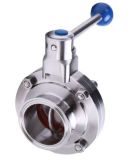
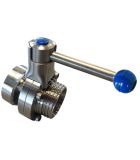
Butterfly valves are characterized by a circular body, inside which there is a disc firmly attached to a central rotating shaft that acts as a seal.
The body is normally constructed of cast iron, while the disc can be made of cast iron or stainless steel.
The industry is increasingly adopting these valves as an alternative to gate and ball valves due to their advantages in cost, dimensions, and design. Their wide range of sizes and materials makes them highly versatile and suitable for multiple applications.
Operation
There are three possible positions for regulating the flow rate in a butterfly valve:
- In the closed position, the disc blocks the flow.
- In the open position, the disc rotates 90º on the pipe axis to allow passage.
- In the partially open position , along with the installation of a positioner, it is possible to regulate the flow rate.
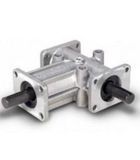
The butterfly valve disc is moved by a stem connected to the valve body. A worm gear reducer is used on the stem to position the disc in the desired open or closed position. This reducer not only provides self-locking capability and stops the disc in any position, but also improves the valve's operating efficiency.
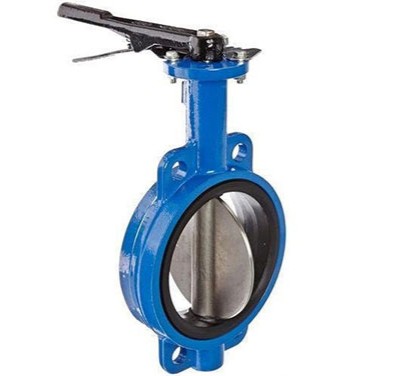
Wafer type connection
This type of valve has a cylindrical body that is installed between the line flanges, which are joined together by through bolts. The body is typically equipped with four lugs for centering the valve. This solution is the most economical and the most widely used.

Difference between a lug and a wafer valve
Possible drives
A- Manual
They have a mechanism operated by means of a lever or handwheel, which allows the valve to be turned to open or close the passage of the fluid.
B- Tire
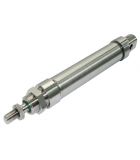
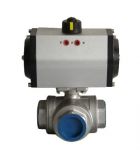
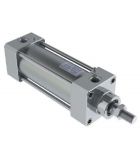
Pneumatic actuators are very common in industry due to their efficiency and speed in operating butterfly valves. They operate using compressed air to generate the movement necessary to open and close the valve. These actuators offer precise control and are ideal for applications in industrial environments.
In this respect, there is the possibility of configuring a single-acting or double-acting pneumatic actuator, which can be purchased together with the valve or independently.
In which industries and applications are they used?
- Corrosive chemical applications such as sulfur or sulfuric or nitric acid.
- Food and beverage industry.
- Petrochemical industry.
- Biotechnology industry.
- Maritime industry.
- Mineral extraction.
- High purity water (semiconductors).