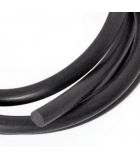
DRILL 3010
€143.06
(tax excl.)
€173.10
(tax incl.)
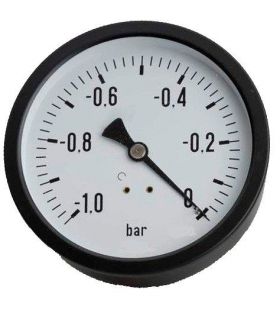
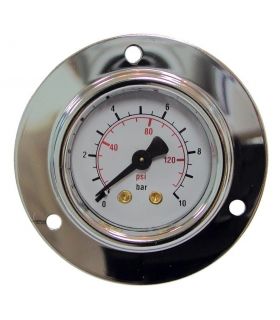
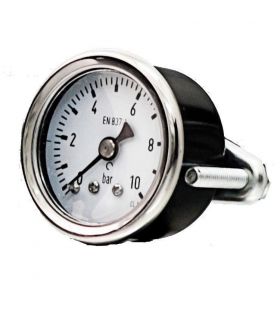

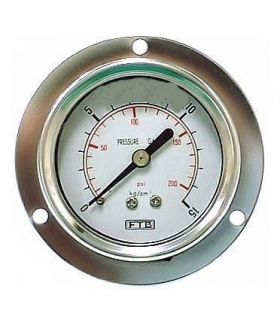
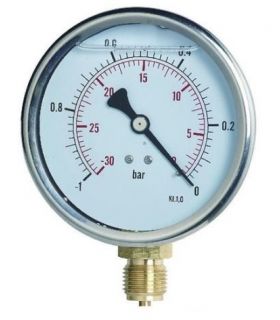
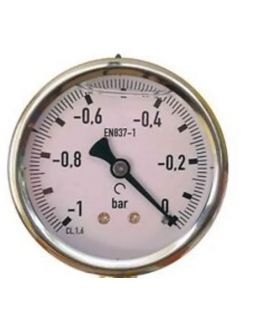
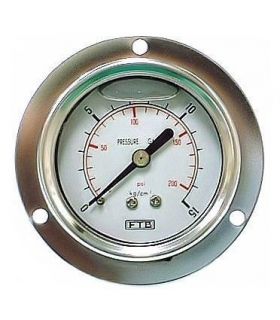
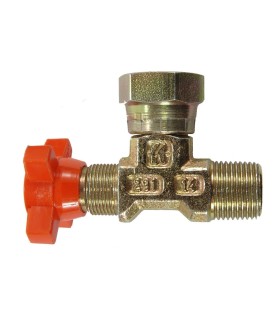

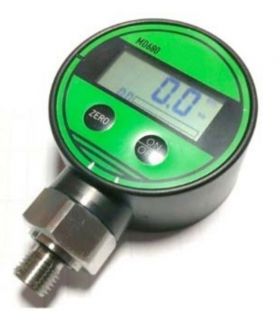
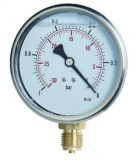
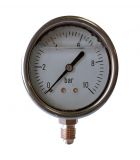
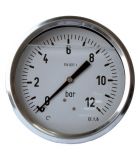
A vacuum gauge is an instrument used to measure pressure in a vacuum environment . (depression) Essentially, it works by measuring the force needed to attract a diaphragm or spring to a specific position. This is accomplished through a sensor that measures the deflection of the diaphragm or spring and converts it into a pressure reading. The units in which vacuum is usually measured are Bar, millibar, atmospheres, psi or mmHg.
The most common sizes of vacuum gauges can be, diameter 40, 50, 63, 100 and 160 mm. They can have a glycerin bath to dampen measurements and vibrations. Glycerin is a transparent, viscous liquid that has a high density and low evaporation.
Due to their physical properties, vacuum gauges are used in a variety of applications where it is important to measure and control pressure in a vacuum environment.
Some of the common applications of vacuum gauges include:
It is important to note that vacuum measurement can be a complicated process, as even small leaks can significantly affect measurements. Additionally, proper calibration and maintenance are essential to ensure the accuracy and reliability of vacuum gauges.
Overall, vacuum gauges are important tools in any application that requires the precise measurement and control of pressure in a vacuum environment.

Please sign in first.
Sign in