FRL Unit: What it is, how it works, and how to choose the right one
In industrial pneumatic systems, the quality of compressed air directly influences the performance, reliability, and lifespan of the equipment. The presence of moisture, contaminants, or inadequate pressure can lead to breakdowns, premature wear, and reduced efficiency in production processes.
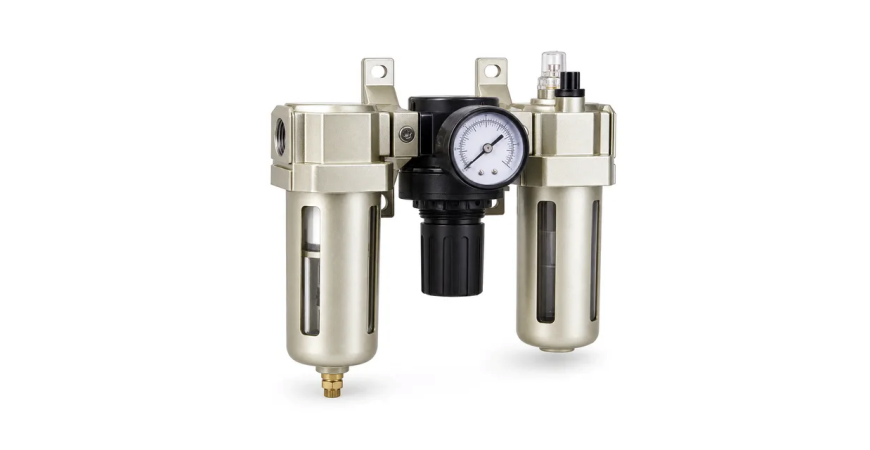
To avoid these problems, pneumatic systems use various components designed for air treatment and conditioning. Among these, the FRL unit stands out, an assembly that integrates three essential functions: filtration, pressure regulation, and, when required by the application, lubrication.
What is an FRL unit?
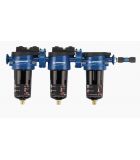
An FRL unit is a compressed air preparation assembly used in pneumatic systems. Its name comes from the initials of its three main components:
F – Filter: removes solid particles and separates some of the condensed water and other contaminants present in the air.
R – Regulator: adjusts and maintains the outlet pressure within the value required by the installation, within its operating limits.
L – Lubricator: incorporates a controlled amount of oil into the airflow to lubricate compatible pneumatic components.
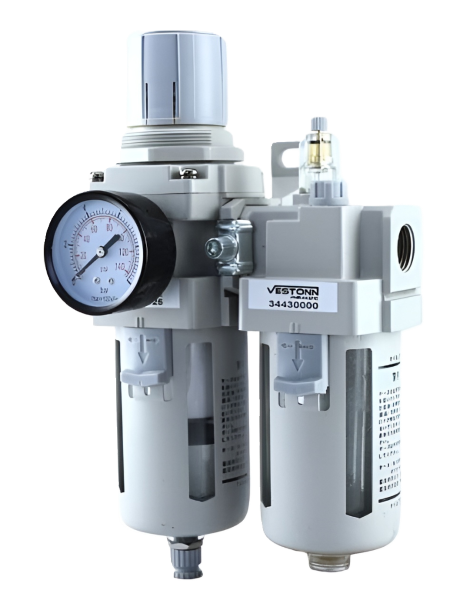
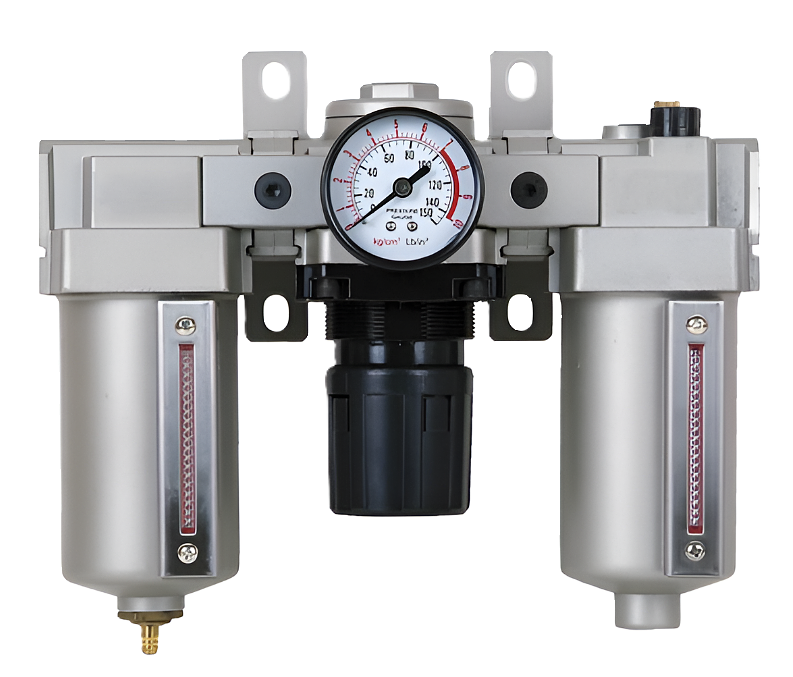
FRL units can be found as complete sets or through individual components that are combined according to the application's needs.
What are the advantages of an FRL unit?
- Equipment protection: Filtration reduces the entry of particles and contaminants into valves, cylinders, and other pneumatic elements.
- Pressure control: allows adapting the working pressure to the requirements of each machine or circuit.
- Wear reduction: lubrication can decrease friction in components designed to work with lubricated air.
- Greater operational reliability: a properly conditioned air conditioner helps to prevent certain breakdowns and malfunctions.
- Better adaptation to each application: allows you to configure the air treatment according to the specific needs of the system.
How does an FRL unit work?
The operation of an FRL unit is based on the sequential passage of compressed air through its components. Each element performs a specific function before the air reaches the consuming equipment.
The pneumatic filter is the first component of the FRL unit. Its function is to retain solid particles and separate some of the liquid water and other contaminants that may be present in the compressed air.
The pressure regulator allows you to adjust the downstream pressure to suit the needs of the pneumatic installation.
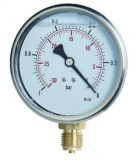
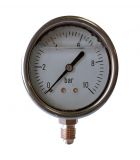
It typically has an adjustment knob and, in many cases, a pressure gauge to facilitate reading the regulated pressure. Through an internal mechanism, the regulator modifies the airflow to maintain the outlet pressure close to the selected value within its operating range.
A pneumatic lubricator introduces a metered amount of oil into the compressed air. This lubrication can reduce friction and wear in pneumatic equipment designed to operate with lubricated air. However, not all installations require a lubricator.
How to choose the right FRL unit?
The selection of an FRL unit should be based on the characteristics of the installation and the requirements of the equipment that will receive the compressed air. Therefore, it is necessary to verify its flow capacity, pressure range, and compatibility with the operating conditions.
1. Required airflow
The unit must supply the air volume required by the connected equipment without generating excessive pressure loss. To size it, it is advisable to consider the air consumption of the actuators, valves, and pneumatic tools, as well as any simultaneous consumption and peak demand.
2. Inlet pressure and outlet pressure
It is necessary to check the available network pressure and the equipment's regulation range. The unit's maximum permissible pressure must be compatible with the inlet pressure.
3. Connection size
The connection must be compatible with the pipe and the rest of the components.
4. Filtration level
The filtration level should correspond to the air quality required by the application. For general use, a standard filter may be sufficient, while processes requiring higher levels of cleanliness may need additional filtration.
5. Need for lubrication
Before choosing a three-element unit, you need to determine if the connected equipment actually needs lubricated air.