Do you know how to choose the right pressure gauge?
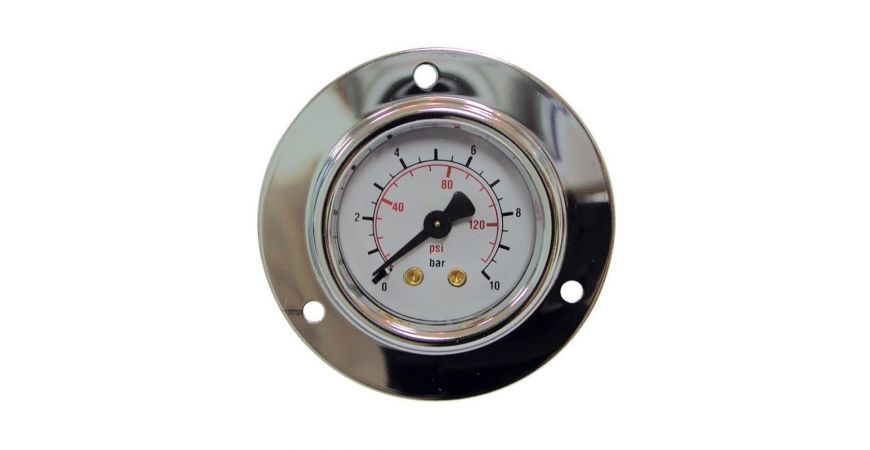
Guide to choosing your pressure gauge
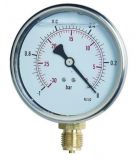
There are many different types of pressure gauges designed for specific situations. Buyers can use the following characteristics as a guide.
1. The size
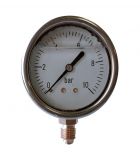
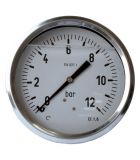
The diameter of a typical pressure gauge dial ranges from 6.4 cm to 15.2 cm. The choice should be based on your specific requirements for readability, space, and accuracy. Additionally, the size of the final connection is also a significant factor, as it will determine the required gauge size.
2. The temperature
The ambient temperature determines the materials the pressure gauge should be made of (brass, stainless steel, nickel alloy, etc.). Therefore, the lower the ambient temperature, the more likely a liquid-filled gauge is to be the right choice. Conversely, if the ambient temperature exceeds 60°C, stainless steel should be chosen.
3. The application
The type of industry where the device is located also influences its characteristics.
Gauges for potable water applications must be lead-free, while process industries such as refineries and pharmaceuticals require industrial process instruments. Cryogenic gas tanks require both differential and operating pressure measurement, and for oxygen service, they must be free of oils and greases. Pressure gauges used in sanitary processes must be hygienic. The highly aggressive gases used in the semiconductor industry necessitate ultra-high purity (UHP) pressure gauges. Furthermore, some applications require special approvals.
4. The middle
The medium in contact with the pressure gauge determines the material from which it is designed.
A brass (copper alloy) pressure gauge is suitable for water, air, or other non-aggressive liquids or gases. However, acid gas (hydrogen sulfide), ammonia, creosote, and other aggressive chemicals require corrosion-resistant materials such as stainless steel or a nickel-copper alloy.
The medium also affects the filling of the case. Glycerin is the standard filling fluid for non-oxidizing environments, while highly reactive media require an inert oil.
5. Pressure
The type of pressure gauge depends on the measurement: relative pressure, absolute pressure, or differential pressure.
The operating range of the application must also be considered. Generally, a pressure gauge with a range twice the optimal service pressure should be selected, as this ensures the best performance. Standard pressure gauges can operate up to 20,000 psi (1,600 bar), and specialized gauges up to 87,000 psi (6,000 bar). For low-pressure measurements, a capsule pressure gauge detects small pressure differences in millibars (mbar), millimeters of water column (mmH2O), or ounces per square inch (oz/in²).
At Disumtec we offer a wide range where you will find the most suitable solution.