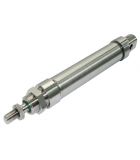
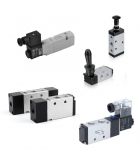
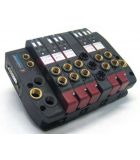
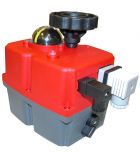
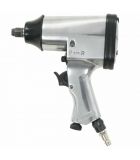
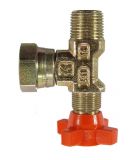
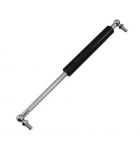
What is a pneumatic drive?
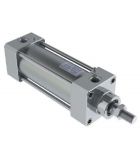
A pneumatic drive is a system designed to generate motion and apply force using compressed air. Essentially, it's the mechanism that transforms the energy of pressurized air into mechanical work (linear or rotary motion) to perform a specific task in a machine or industrial process.
What is a pneumatic actuated distributor?
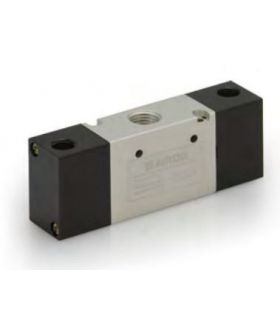
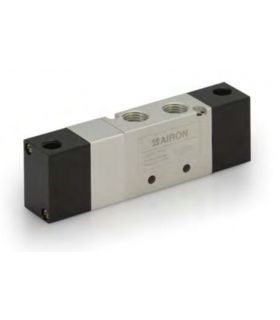
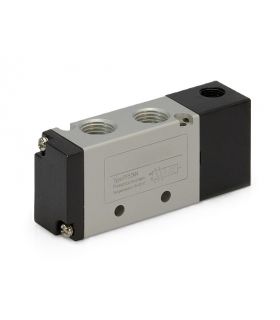
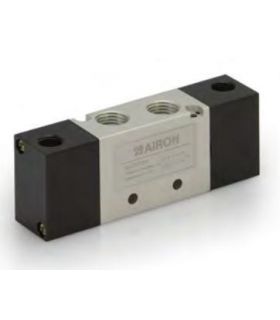
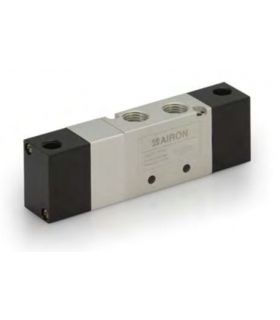
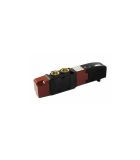
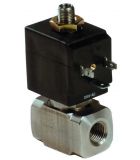
It is a valve responsible for controlling the direction and flow of compressed air, whose switching is carried out by a pneumatic signal (pressurized air) instead of a manual or electric drive.
What types of pneumatic actuation exist?
The main difference between the two systems lies in their behavior when the signal is lost: simple piloting (monostable) works by means of a spring return, which forces the valve to automatically return to its initial position as soon as the activation signal ceases; in contrast, double piloting (bistable) uses two independent pneumatic signals to switch between states, allowing the mechanism to maintain its last position stably without the need for a continuous signal.
How is this type of distributor operated?
The switching occurs when a pneumatic pressure signal acts on an internal pilot, displacing the control element (slide or seat).
In what applications are they used?
- Industrial pneumatic automation
- Sequential systems without electrical control
- Double-acting cylinder control
- Installations in ATEX environments or without electricity
What are the limitations of pneumatic actuation?
- They require a pneumatic pilot line
- Less flexibility compared to electronic systems
- Sensitivity to air quality (humidity, particles)