Complete guide to pneumatic fittings

In any pneumatic system, fittings play an essential role. They are the components responsible for joining pipes, hoses, and equipment to ensure a safe, efficient, and leak-free airflow. Choosing the right fitting not only improves system performance but also reduces breakdowns, maintenance time, and pressure loss.
In this article we review the main types of pneumatic fittings, their advantages and the most common applications in industry.
What is a pneumatic fitting?
A pneumatic fitting is a connection accessory used in compressed air and vacuum systems. Its main function is to join different elements of the pneumatic circuit.
Most commonly used types of pneumatic fittings
1. Instant pneumatic fittings:
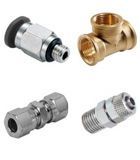
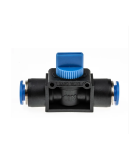
Instant fittings are probably the most widely used in industrial automation. Also known as push-in fittings, they allow tubes to be connected and disconnected without tools, simply by inserting the tube into the fitting body.
Instant fittings are notable for offering a quick, secure, and efficient connection. Their main advantages include tool-free installation, rapid assembly, reusability, and excellent sealing.
Thanks to their versatility and ease of use, instant fittings are widely used in industrial automation, robotics, production lines, CNC equipment, and compact pneumatic systems.
.png)
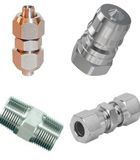
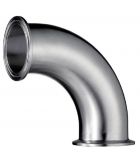
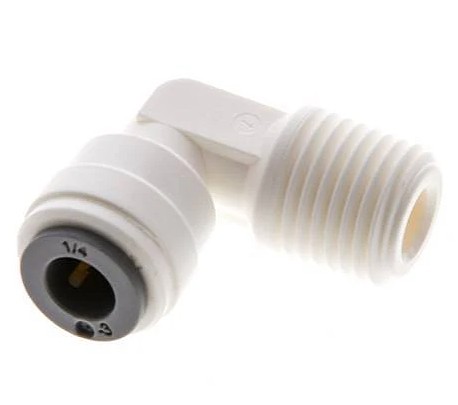
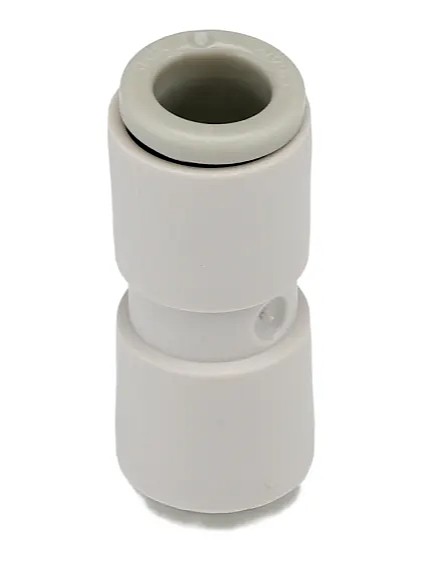
Metric sanitary fittings are the best option in sectors where hygiene and corrosion resistance are a requirement.
Its main advantages include high chemical resistance, excellent corrosion resistance, and compatibility with CIP cleaning processes.
These components are designed for installations where cleanliness and reliability are essential. They are commonly used in sectors such as the food industry, pharmaceuticals, medical equipment, laboratories, and liquid treatment systems.
3. Semi-fast pneumatic fittings:
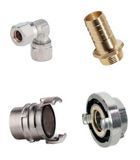
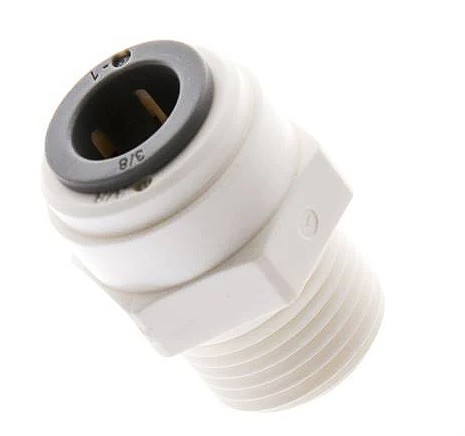
Semi-quick fittings combine ease of assembly with enhanced mechanical strength. They are ideal for installations requiring occasional disassembly, but with an extra level of protection against vibrations or movement.
They are notable for their ease of assembly, allowing for a secure and efficient connection in pneumatic systems without the need for complex tools. Their design offers good mechanical strength, ensuring reliable performance even under demanding working conditions.
Thanks to their superior stability in industrial environments, these fittings are suitable for medium and high pressure applications. They are commonly used in industrial machinery, vibrating systems, mobile pneumatic installations, and maintenance equipment.
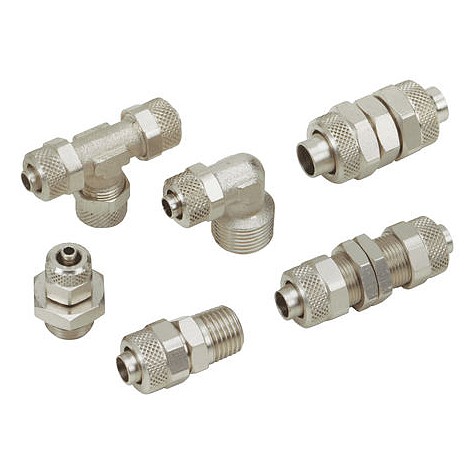
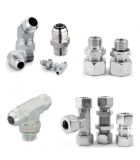
Biconical nut fittings are a classic and extremely reliable solution for metal connections. They utilize a compression system with a biconical ring that ensures a robust and high-pressure resistant joint.
Their design, based on a bicone compression system, ensures excellent sealing, reducing the risk of leaks even under demanding working conditions. Made of brass, they are notable for their high mechanical strength and durability, making them a robust solution for permanent installations.
These fittings are commonly used in light hydraulic circuits, compressed air systems and industrial installations where a stable and long-life connection is required.
Pneumatic fittings are essential components in any compressed air system. Choosing the right model improves efficiency, reduces maintenance, and increases system safety.
Instant fittings stand out for their speed and ease of use, sanitary fittings for their hygiene and chemical resistance, semi-fast fittings for their robustness, and bicone nut fittings for their mechanical reliability.