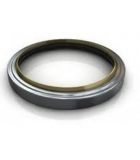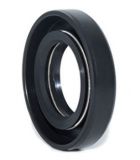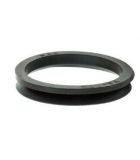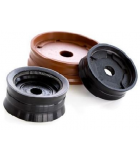
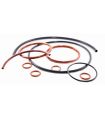
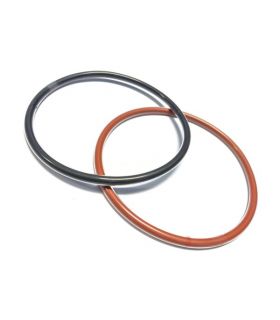
Encapsulated gaskets combine the elasticity and sealing strength of an elastomer with the chemical resistance of Teflon. They consist of a silicone or Viton® elastomeric core with a relatively thin encapsulation...
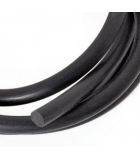
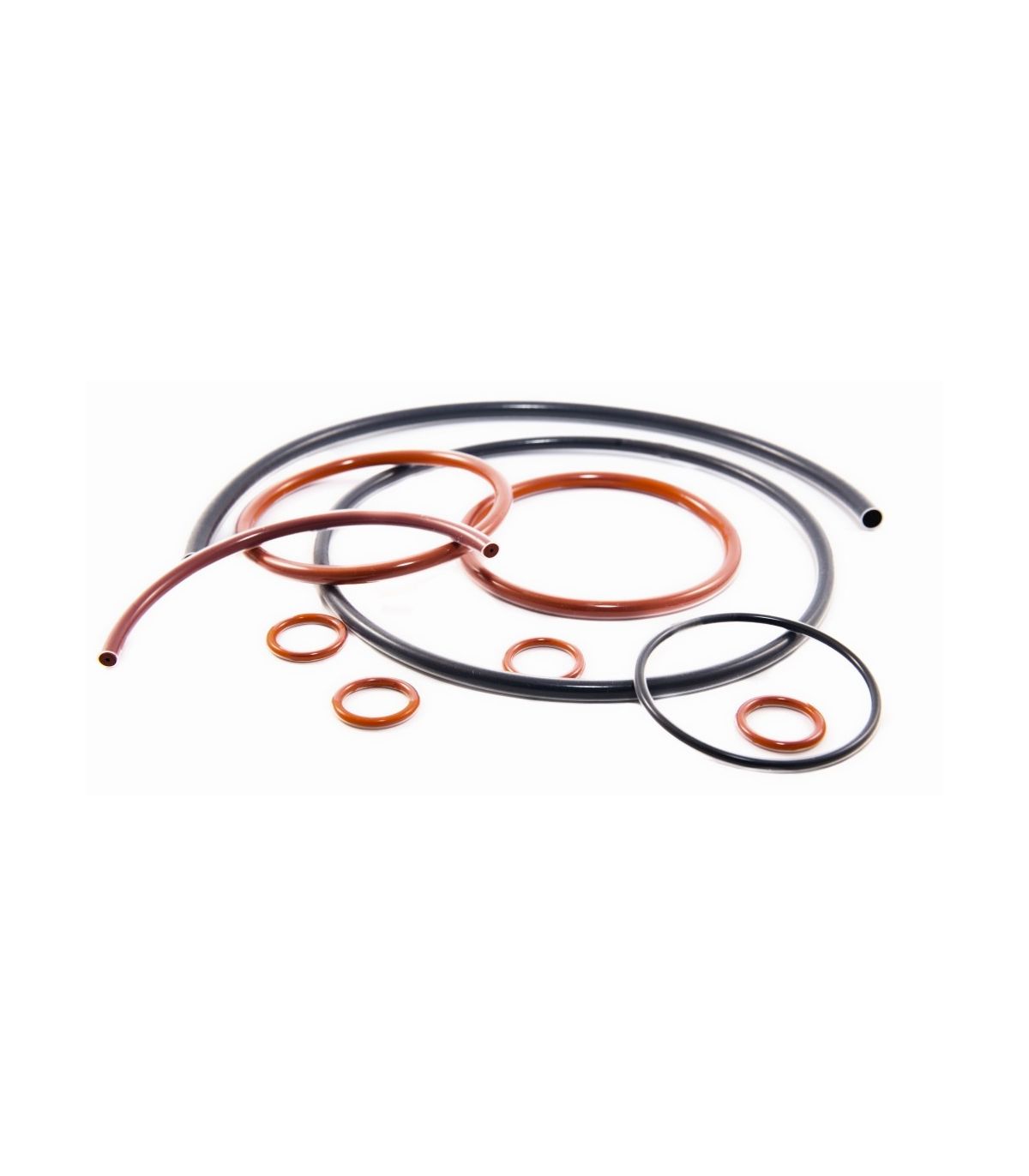
Encapsulated gaskets combine the elasticity and sealing strength of an elastomer with the chemical resistance of Teflon. They consist of a silicone or Viton® elastomeric core with a relatively thin encapsulation molded from a FEP or PFA polymer.
The uniform, one-piece FEP/PFA encapsulation provides nearly universal sealing capability to the encapsulated gasket, while the elastomer core constantly readjusts and presses the encapsulation onto the sealing point. The result is sealing compression at all points, which increases the average pressure. The encapsulated gasket behaves like a highly viscous fluid, so any pressure exerted on the gasket is transmitted without significant loss in all directions.
Examples of industries:

Please sign in first.
Sign in